7 sleep hygiene myths debunked
At a glance
- Sleep hygiene influences rest quality and duration, affecting mood, focus and overall health
- If you can’t sleep, get up and do something calming; avoid stimulating screen content before bed
- Sleep aids don’t fix poor sleep; ongoing sleep problems are often treatable — talk to your provider
Sleep affects every part of our health and well-being — from our mood to our immune system — but it doesn’t always come easily. More than half of adults in an American Academy of Sleep Medicine (AASM) survey shared they don’t get enough sleep.
Sleep hygiene, or our habits and behaviors around sleep, shapes how well and how long we rest. Muhammad Usama, MD, FACP, a sleep medicine specialist at MultiCare Neuroscience Institute, clears up some common sleep hygiene myths and shares tips to help you get a good night’s rest.
Myth: If I’m having trouble sleeping, I should stay in bed until I fall asleep.
Truth: If you’re having trouble sleeping, get up after about 20 minutes.
Lying in bed awake too long can actually heighten feelings of stress and ultimately make it harder for you to drift off.
“When people spend hours awake in bed, the brain can start linking the bed with frustration, worry and clock-watching instead of sleep,” Dr. Usama says. “If you can’t sleep after about 20 minutes — or you’re becoming increasingly frustrated — get out of bed and do something quiet, boring and relaxing in dim light. When you feel sleepy, return to bed.”
Relaxing activities to consider include:
- Reading a book or magazine
- Writing in a journal
- Doing breathing exercises
- Playing a word game or puzzle
- Coloring or drawing
- Doing gentle stretching
- Listening to soothing music
“This approach of getting out of bed when you can’t sleep is a core behavioral strategy used in insomnia treatment,” Dr. Usama says. “The goal is to teach the brain that the bed means sleep, not struggle.”
Myth: Watching TV or scrolling on my phone can help me unwind.
Truth: How, when and what you’re watching determines whether it’s disruptive or helpful for sleep.
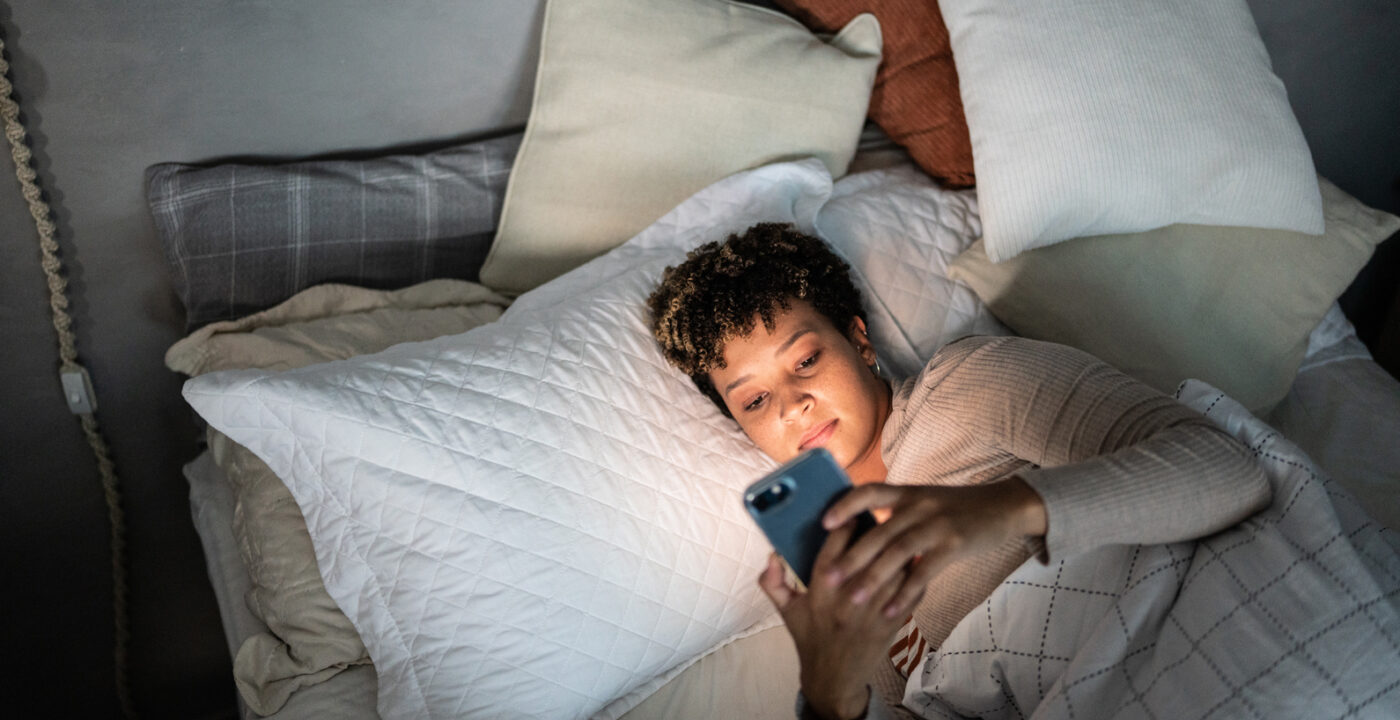
Streaming your favorite show or scrolling Instagram may be your go-to evening activity, but it can interfere with sleep. Screens can increase alertness, expose the brain to light at the wrong biological time and keep the mind engaged when it should be winding down.
However, not all screen time is equal. Tuning into a calm TV show from across the room or reading a book on a Kindle is different from lying in bed scrolling through emotionally charged content, work emails or social media feeds.
“I tell patients that the goal is to protect the last 30-60 minutes before bed,” Dr. Usama says. “During this time frame, reduce stimulation, dim the lights and avoid scrolling in bed. This gives the brain a predictable landing strip for sleep.”
The AASM recommends:
- Turning off electronics 30-60 minutes before bed
- Keeping your phone in another room while sleeping (use a clock instead of your phone as an alarm)
- Silencing notifications if you keep your phone in the room with you
Myth: Over-the-counter sleep aids, like melatonin, are risk-free.
Truth: Use over-the-counter sleep aids, including melatonin, with caution.
Over-the-counter sleep aids can be helpful for occasional sleepless nights, but melatonin in particular is often misunderstood.
Melatonin is a hormone that helps regulate our sleep-wake cycles (also known as circadian rhythm). Melatonin supplements replicate this hormone, but they’re not a cure-all for sleep issues.
“Melatonin can be useful in specific situations, such as circadian rhythm problems or jet lag, but it’s not a universal fix for insomnia,” Dr. Usama says. “And more melatonin in your body does not necessarily mean you will sleep better.”
Another concern with melatonin — or any sleep supplement — is safety and quality. Unlike prescription medication, supplements are not regulated by the U.S. Food and Drug Administration, so product consistency can vary.
“Some studies have found that melatonin gummies may contain different amounts than what’s listed on the label,” Dr. Usama says. “In children, accidental ingestions have also increased significantly, since melatonin gummies can look like candy.”
Bottom line: If you’re considering melatonin or frequently using over-the-counter sleep aids, talk with your doctor or other health care provider.
Tired all the time? It might be more than busyness
“It’s common to normalize chronic sleepiness because our modern life rewards exhaustion. But needing caffeine to function, dozing unintentionally, falling asleep in meetings or feeling drowsy while driving are warning signs of an underlying problem. If you’re tired all the time, talk to your doctor.”
Myth: I can just catch up on lost sleep over the weekends.
Truth: Sleeping in on the weekends doesn’t erase your sleep debt.
If you don’t get enough sleep during the week, sleeping in on the weekends may help you to feel temporarily more rested. But it doesn’t fully undo the effects of chronic sleep debt — the gap between the amount of sleep you need and the amount of sleep you’re getting.
Over time, that gap can affect your physical and mental health, impacting your mood, memory and attention, and increasing your risk for multiple conditions.
On the other hand, sleeping in too much or too long can also disrupt your circadian rhythm, making Monday morning harder than it needs to be.
“The goal is to aim for a consistent sleep schedule throughout the week — even on the weekends,” Dr. Usama says.
Myth: A drink before bed will help me relax and sleep better.
Truth: Alcohol impairs the quality of your sleep and can increase awakenings.
While a glass of wine or after-dinner cocktail may make you feel drowsy and relaxed, your overall sleep quality is likely to suffer. And sleep quality matters just as much as the amount of time you spend in bed.
“Sedation from alcohol is not the same thing as healthy sleep,” Dr. Usama says. “Alcohol causes more fragmented sleep, so people may wake up feeling less restored. Alcohol can also worsen snoring or obstructive sleep apnea because it relaxes muscles in the airway.”
To protect the quality of your rest, avoid alcohol within four to six hours of bedtime.
Myth: I need less sleep as I get older.
Truth: Most adults, no matter their age, still need seven to eight hours a sleep each night.
While many adults sleep less as they get older, that doesn’t mean their need for sleep changes.
“Sleep may become lighter and more fragmented with age, or people may find they start getting up earlier,” Dr. Usama says. “But most adults, of all ages, still need seven to eight hours of sleep a night.”
If you’re not getting enough sleep or feeling excessively tired during the day, talk to your provider. Symptoms like loud snoring, frequent awakenings or unintentional daytime naps can be signs of a treatable sleep disorder or other medical issue.
Myth: If good sleep hygiene isn’t helping, there’s nothing I can do.
Truth: Ongoing sleep problems are often treatable.
“If sleep hygiene practices aren’t helping you get quality rest, then it may be time for a sleep evaluation,” Dr. Usama says. “Many sleep problems, including chronic insomnia, sleep apnea and restless legs syndrome, all have effective treatments.”
Talk to your provider if sleep problems:
- Persist for more than a few weeks
- Cause daytime impairment
- Come with warning signs such as loud snoring, gasping or pauses in breathing; morning headaches; drowsy driving; restless legs; unusual behaviors during sleep; or severe daytime sleepiness
What's next
- Ringing in your ears disrupting your sleep? Here’s what to do
- Is obstructive sleep apnea causing you to snore?
- What your device can tell you about your rest