Should I see a doctor: Excessive sweating
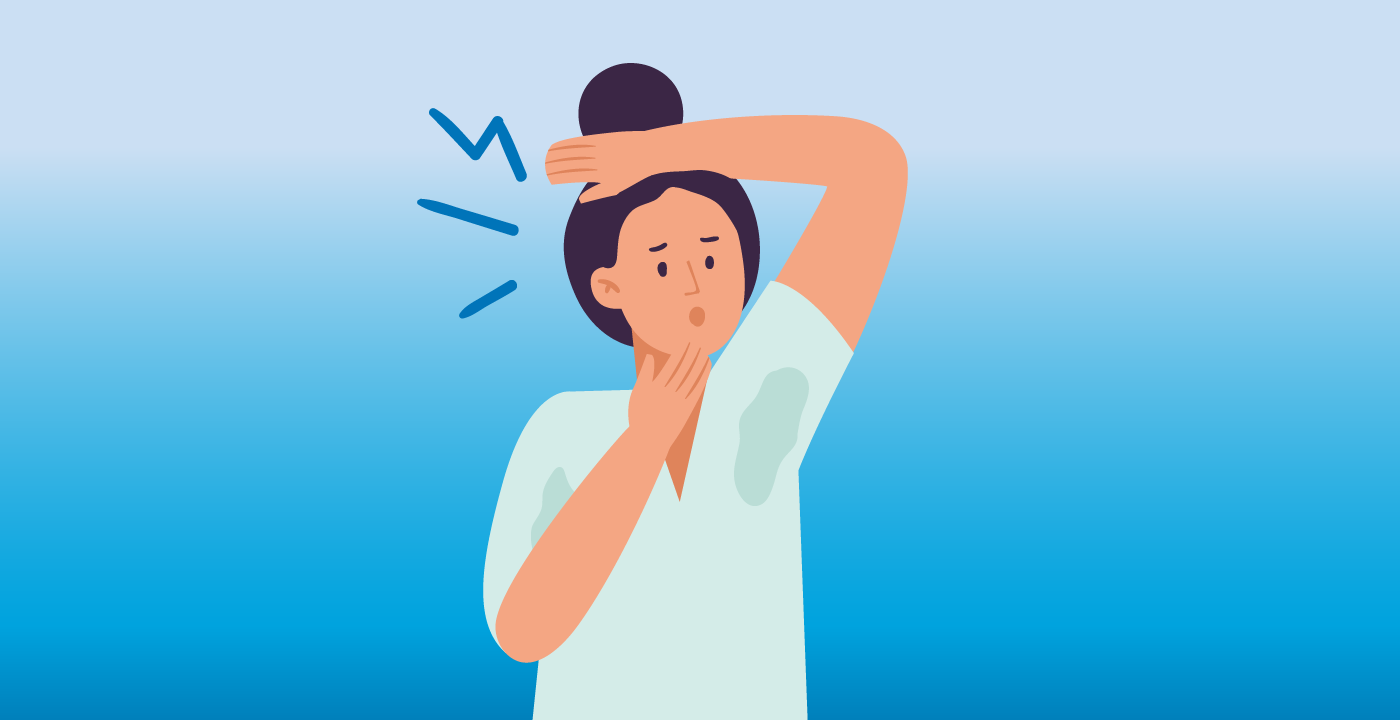
We all get sweaty. Whether it’s a hot day, nerves before a big presentation or a hard workout, sweating is a necessary body function.
But when you find yourself sweating constantly or excessively in specific areas of the body, it may be time to talk with your doctor or other health care provider.
Hyperhidrosis, more commonly referred to as excessive sweating, is real and more common than you may think, affecting as much as 3 percent of adults in the United States.
How can you tell the difference between normal sweating and hyperhidrosis? We break it down for you here.
What’s ‘normal’
Think about times you find yourself typically sweating: when sitting outside on a hot day, doing strenuous physical activity, feeling anxious or nervous, eating spicy food and so on. Sweating is the body’s natural and necessary response to prevent overheating.
Eccrine glands are responsible for producing sweat to keep your body cool. The sweat acts as a natural coolant for the skin and underlying tissue.
It’s normal for your body to respond this way as long as it needs to (assuming you’re not experiencing heat stroke). Once you’ve stopped the sweat-triggering activity or have sufficiently cooled down, sweating should stop.
What’s ‘not normal’
With hyperhidrosis, you’ll find that you’re sweating when your body doesn’t need cooling — on cold days, while relaxing in a comfortable temperature or simply throughout the day without any specific trigger. This is a result of overactive eccrine glands.
In most cases, you’ll also notice this sweat occurs in specific areas of the body, like the underarms, palms, feet or head. But it can also involve excessive sweating over the entire body.
Other common symptoms of hyperhidrosis to look for:
- Sweating that stops when you sleep
- Excessive body odor with sweating
- Soft skin that peels easily
- Chafing or frequent skin infections
If your sweating interferes with your daily routine and causes emotional stress — such as needing to constantly dab at your forehead or avoiding events because you’re worried about sweat stains — schedule an appointment with your provider.
Your primary care provider is a great place to start, as they can offer many of the entry-level treatment options. If your condition persists or is more complicated, they can refer you to a dermatologist.
While excessive sweating is not an emergency, you don’t need to live with the constant annoyance, irritation or embarrassment. There are treatments available for hyperhidrosis.
How to care for your condition
There’s no cure for hyperhidrosis, but treatments can significantly reduce its impact on your daily life.
Start by scheduling an appointment with your provider to determine which type of hyperhidrosis you may have.
Primary hyperhidrosis is caused by a faulty nerve signal that causes the eccrine glands to become overreactive.
Secondary hyperhidrosis is caused by an underlying health condition, such as diabetes, menopause, thyroid or nervous system disorders/infections, or from taking certain medications, including pain relievers, antidepressants or some diabetes and hormone treatments.
Once the type is determined, your provider will either prescribe a treatment plan or refer you to a dermatologist for further evaluation.
For primary hyperhidrosis, treatment options include prescription antiperspirants and medicated cloths, or topicals and Botox, among a few others. The next level of treatment includes various procedures and technology-based therapies aimed at either reducing the amount of sweat the body can produce or destroying sweat glands. In the most extreme cases, surgery would be a final option.
For secondary hyperhidrosis, a thorough evaluation of any underlying conditions and adjusting medications will be the first step to reduce sweating.
The bottom line: If you just can’t stop sweating and over-the-counter remedies aren’t working, don’t be afraid to ask your doctor or other health care provider.
Medical review provided by Jennifer Kuehl, ARNP, dermatologist at MultiCare Rockwood Dermatology Center. This information does not qualify as individualized medical advice. Please schedule an appointment with your care team to ensure the most appropriate care.
What's next
- Should I see a doctor: Low libido in men
- You’re not alone: Find support & resources with the International Hyperhidrosis Society
- Explore all of MultiCare’s care options for common to complex skin conditions